Lorena Wade, MBA, NBC-HWC — Pepperdine University, Graziadio Business School

The Human Cost of Leadership Gaps in Outpatient Early Intervention Care.

How do leadership practices within outpatient behavioral health organizations influence workforce sustainability and access to care for neurodivergent children?

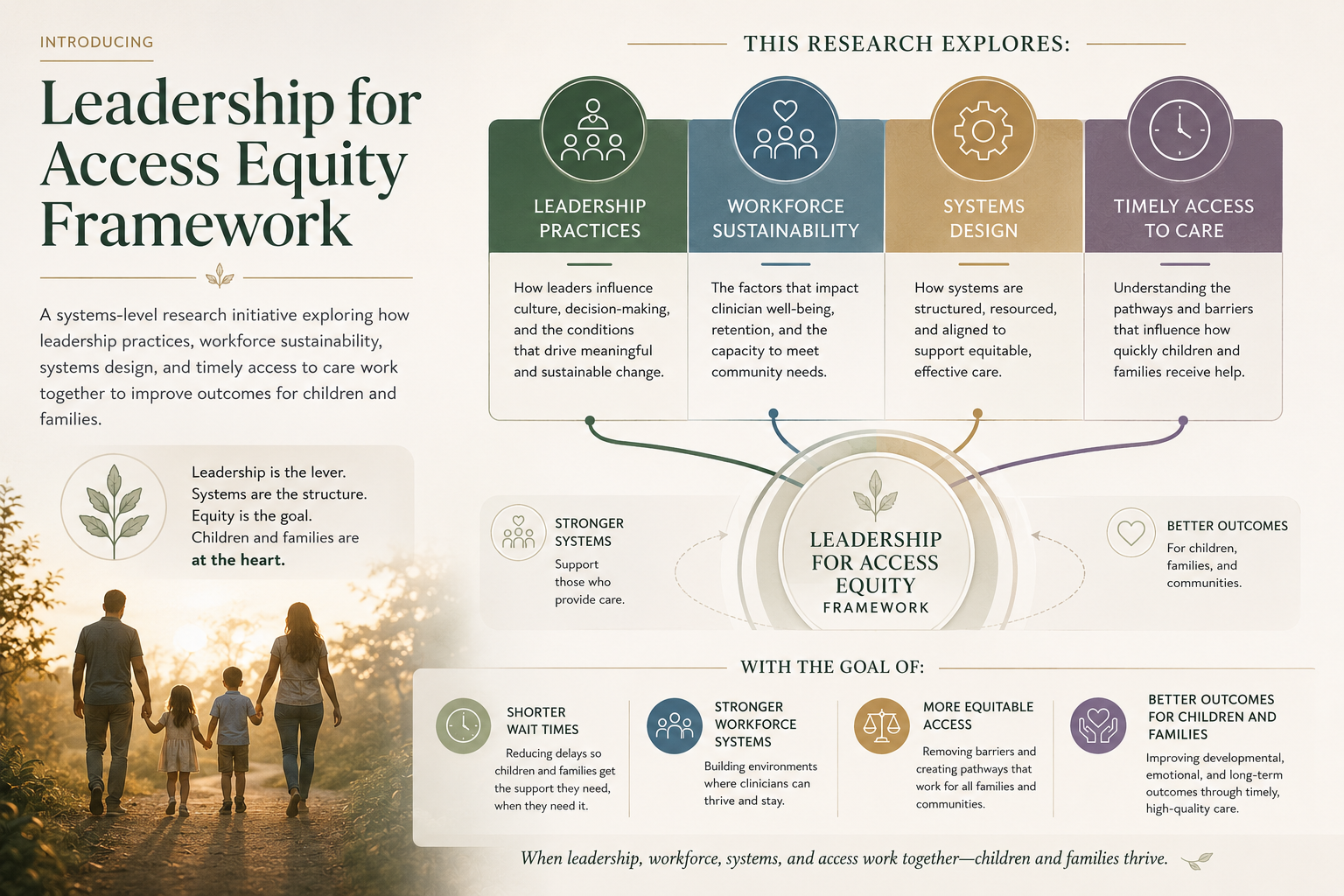
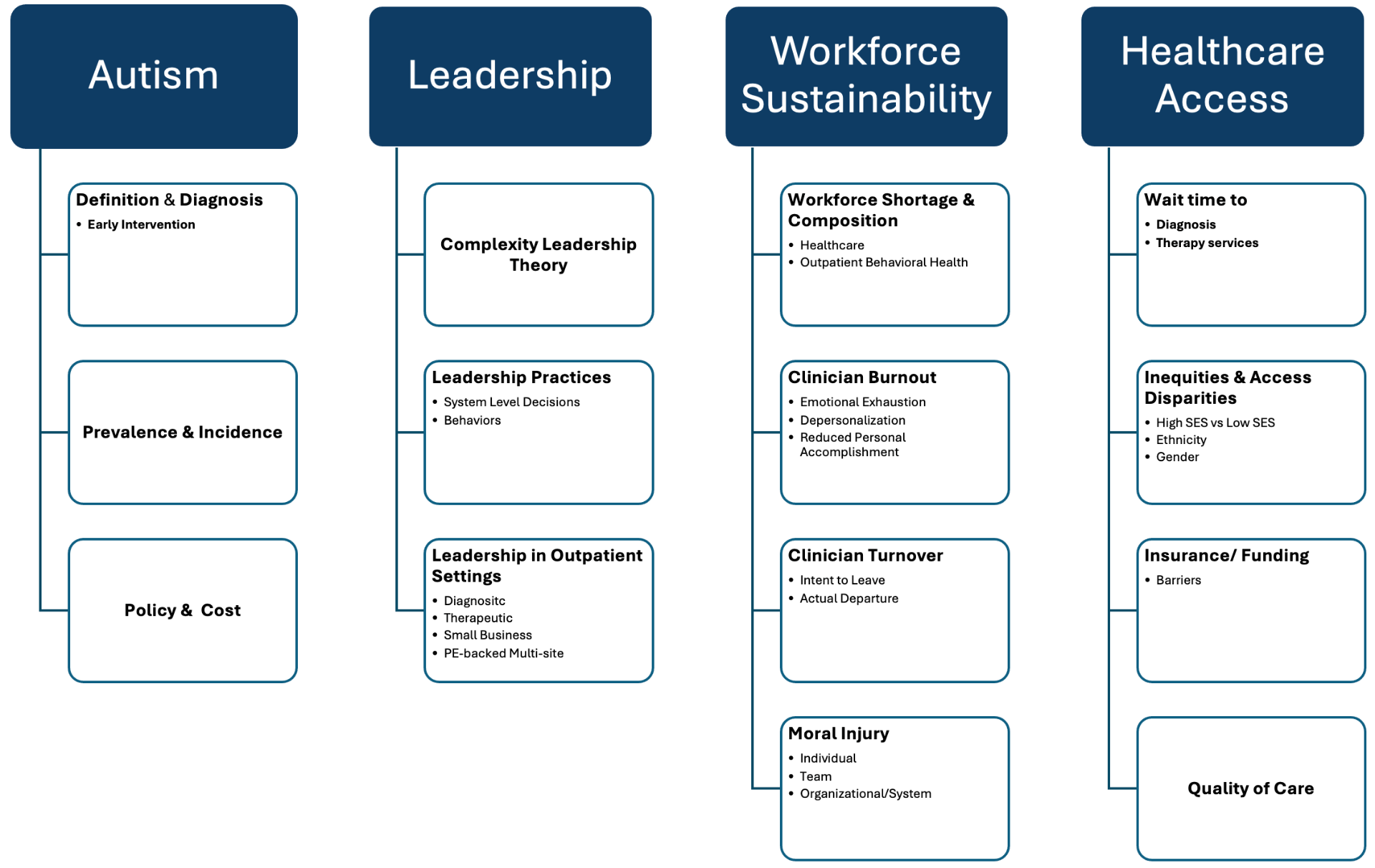
A comprehensive literature review is currently in process across four domains: Autism, Leadership, Workforce Sustainability, and Healthcare Access.

Leadership for Access Equity logo — tree sheltering three children reaching toward stars.

Purpose Statement

To examine how leadership practices shape workforce sustainability and access to timely autism diagnostic and therapeutic care in outpatient early intervention settings, and to inform a practical framework for building stronger systems of care for neurodiverse children, families, and the clinicians who serve them.

Comprehensive Literature Review

Four domains. One integrated question.

The review is structured around four primary literature domains — each with multiple subdomains — that converge on the central research question.

Comprehensive literature review map across Autism, Leadership, Workforce Sustainability, and Healthcare Access, with subdomains under each.
Figure 1 — Comprehensive Literature Review Map
The population at the center of the question.
Domain 1Autism

The population at the center of the question.

ASD remains one of the top neurodevelopmental and most disabling disorders among children, with the first published case reported in 1943 (Isaac et al., 2025; Talantseva et al., 2023). Autism prevalence has risen from 1 in 150 children in 2002 to 1 in 31 in 2022. In American children with developmental delays, 12% under the age of three experience delays in access to care, and 90% are not identified at the youngest age possible (Scherr et al., 2020). Demand for diagnostic and therapeutic services has outpaced outpatient capacity.

The literature is mature on definition and diagnosis, prevalence and incidence, and policy and cost, and increasingly clear that the early intervention window is where outcomes are made or missed.

DEFINITION & DIAGNOSISPREVALENCEPOLICY & COSTEARLY INTERVENTION
Leadership as a system-level lever.
Domain 2Leadership

Leadership as a system-level lever.

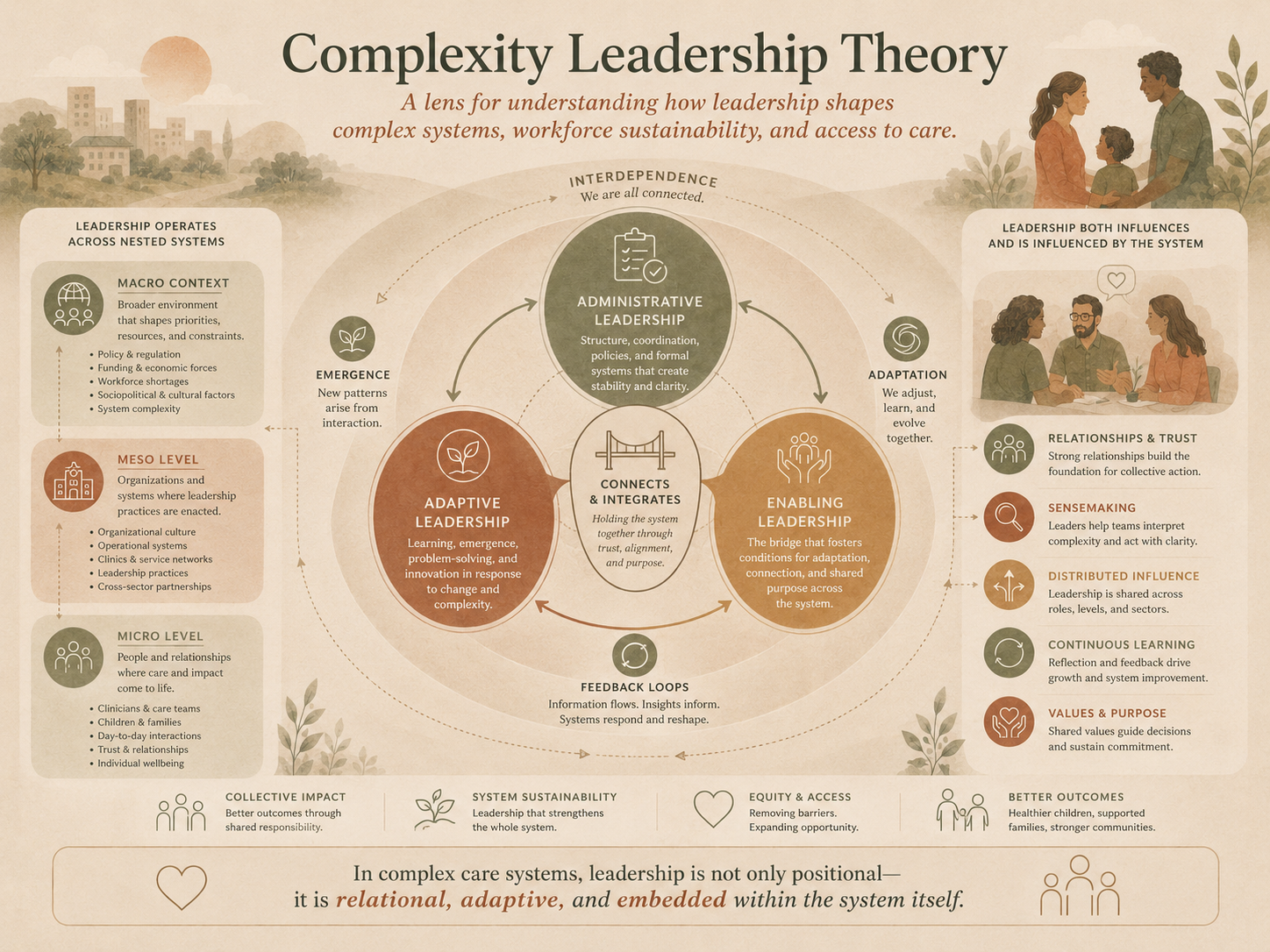
Grounded in Complexity Leadership Theory, outpatient early intervention healthcare is not a linear system, but as a complex adaptive system shaped by relationships, interdependence, uncertainty, and continuous change. Within these environments, leadership is not limited to formal titles or executive roles. Leadership emerges across administrative, adaptive, and enabling functions through the day-to-day decisions, interactions, behaviors, priorities, and conditions that shape how care is delivered. The study examines leadership across a range of outpatient early intervention settings, including: diagnostic and assessment organizations, ABA, PT, OT, ST, and infant development programs, small clinician-founded practices, expanding multi-site outpatient organizations, and private equity-backed healthcare platforms. Ownership and organizational context matter because they shape the operational realities in which leaders and clinicians function. Financial models, growth expectations, staffing structures, productivity pressures, and organizational priorities all influence what becomes possible, or difficult to sustain, within systems of care. Rather than viewing access challenges solely as workforce shortages or operational inefficiencies, this research positions leadership as a foundational systems-level lever that shapes the conditions under which clinicians work, organizations function, and children and families experience care.

COMPLEXITY LEADERSHIPSYSTEM DECISIONSBEHAVIORSOP SETTINGS & OWNERSHIP
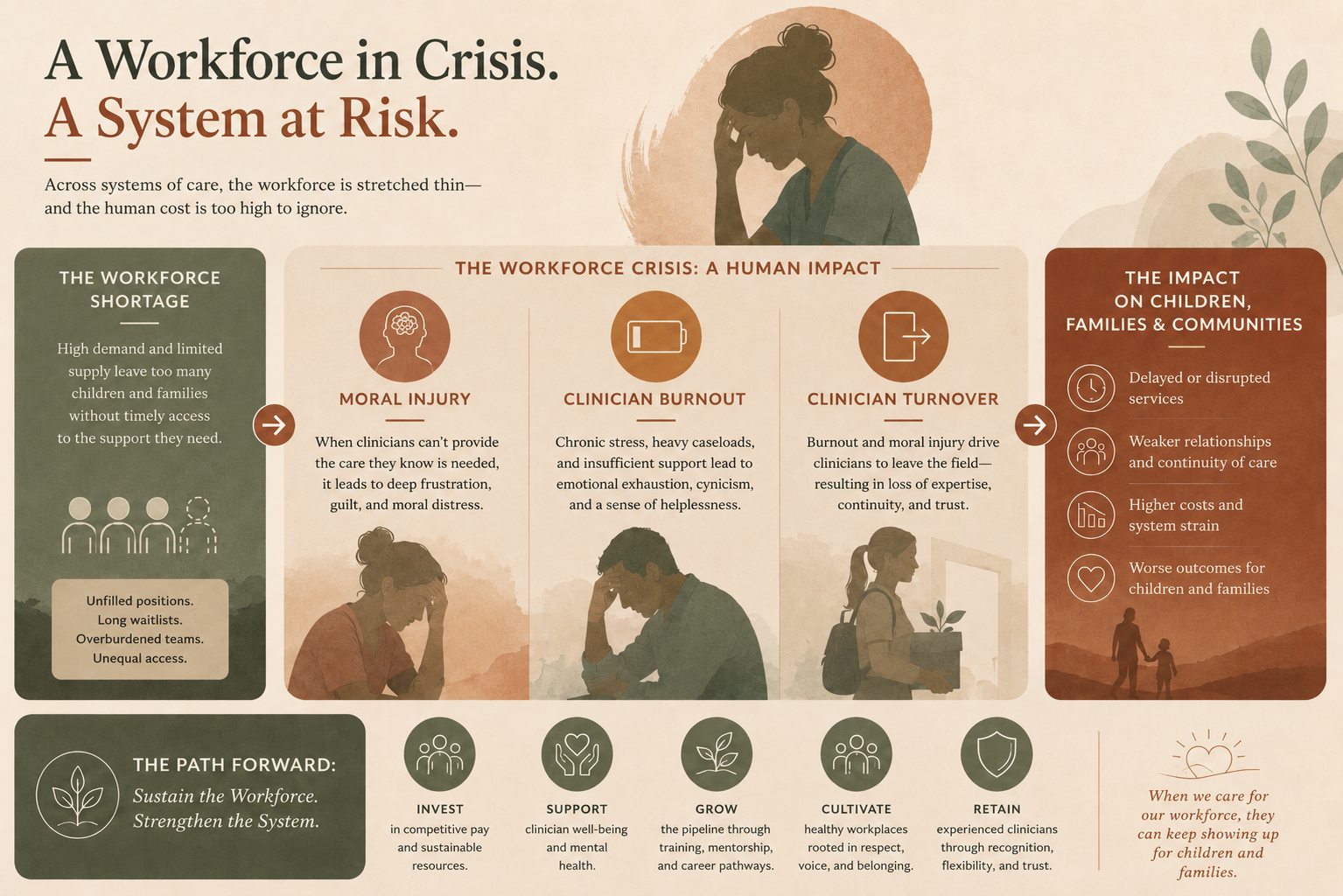
Burnout, turnover, and shortages are not isolated workforce issues, they are barriers to care.
Domain 3Workforce Sustainability

Burnout, turnover, and shortages are not isolated workforce issues, they are barriers to care.

Workforce shortages in outpatient behavioral health are severe: current estimates indicate that there are “approximately 10 child psychiatrists, 30 BCBAs (Board Certified Behavior Analysts), and 69 pediatricians for every 100,000 American children” (McBain et al., 2020), while the American Academy of Child and Adolescent Psychiatry recommend “47 child psychiatrists per 100,000 children” (Buck et al., 2024). The American Academy of Pediatrics notes a stark shortage of developmental-behavioral pediatricians (758 nationwide) for the 19 million children with developmental or learning disorders (Buck et al., 2024), furthermore demonstrating the magnitude of the gap in access to care.

At the same time, outpatient behavioral health organizations are navigating a workforce sustainability problem that directly affects access to care. Burnout is widely reported and appears particularly pronounced among clinicians delivering ABA services. Sule (2025) found that more than 70% of ABA clinicians experience “moderate to high levels of burnout,” frequently tied to heavy workloads and lack of support. Similarly, Slowiak and Delongchamp (2022) reported that 72% of practitioners conveyed feeling burnt out. These patterns are concerning not only because burnout destabilizes retention, but because it has implications for access to care, clinical outcomes and patient experience. Garman et al. (2011) convey that clinician resilience and reduced burnout are associated with improved patient satisfaction and outcomes, reinforcing that burnout is also a quality-of-care issue. Turnover in this healthcare sector further compounds instability, particularly when organizations are already constrained by limited staffing. The scale of anticipated attrition is incredibly higher in this healthcare sector as well, Batiste (2024) reports that “47% of U.S. healthcare workers planned to leave their positions by 2025.” In behavioral health turnover metrics reflect a similar problem. The Behavioral Health Center of Excellence (2022) reported that “From 2020 to 2021, turnover percentages increased from 59% to 65% for direct care staff.” When turnover rises in already constrained care environments, access is affected through fewer appointment slots, even longer wait times, disrupted continuity of care, and reduced ability to meet clinical demand.

SHORTAGE & COMPOSITIONBURNOUTTURNOVERMORAL INJURY
Access is more than a clinic existing.
Domain 4Healthcare Access

Access is more than a clinic existing.

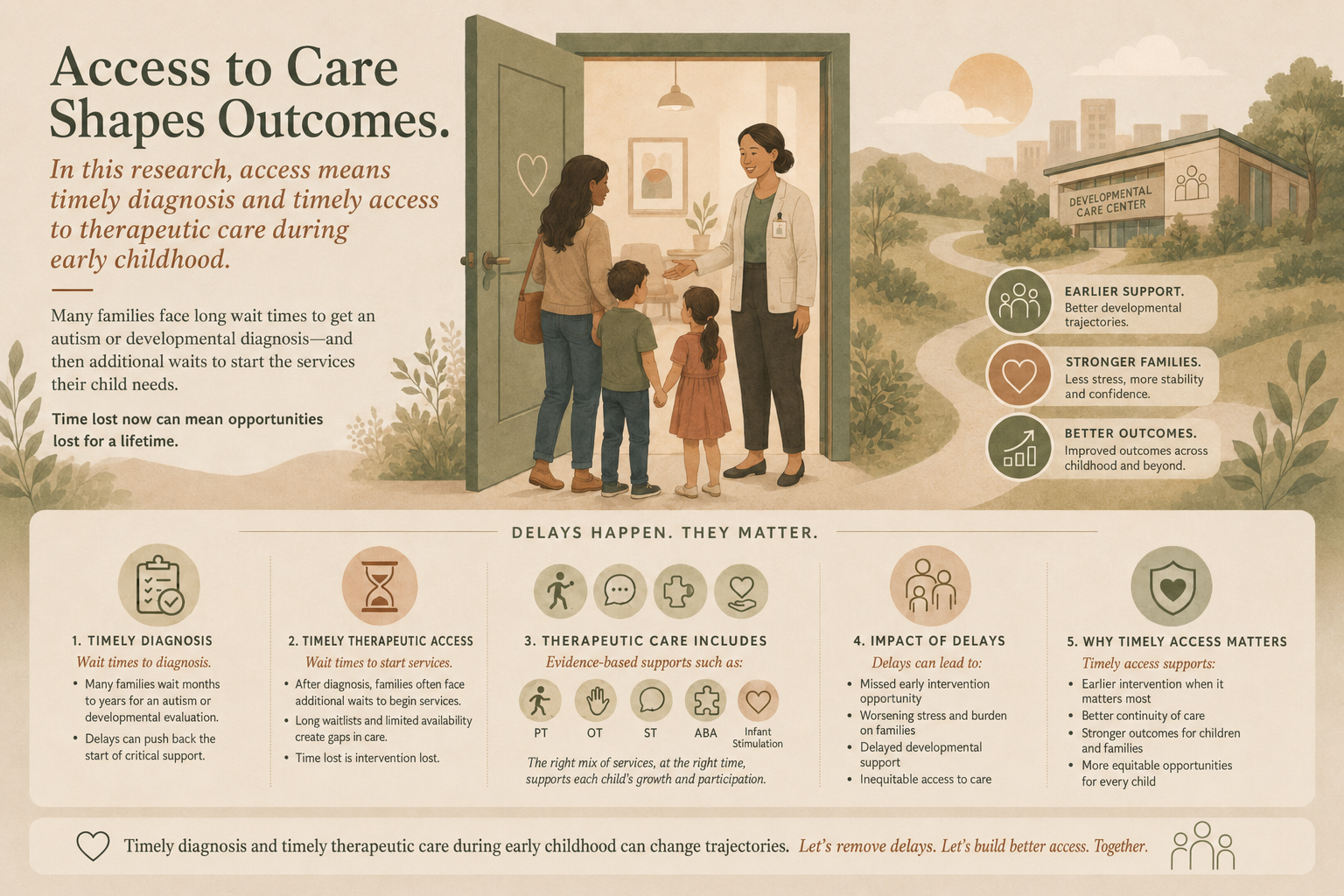
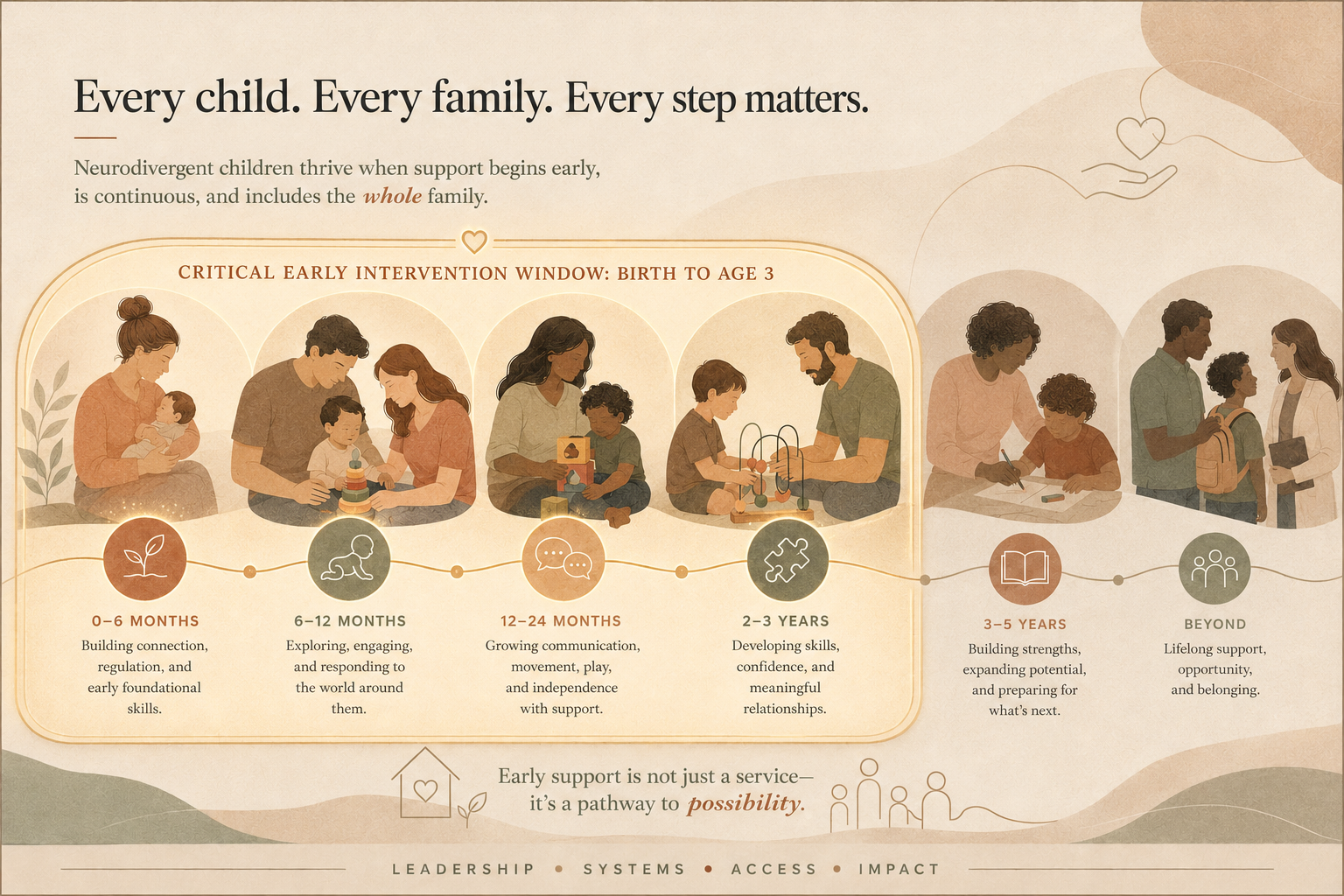
In this research, access refers to both timely diagnosis and timely entry into therapeutic care during the early childhood window. Families often wait 6–12 months for evaluations (Williams et al., 2021), and many children are not diagnosed until age 5 or later, even though autism can be reliably identified as early as 18 months. The time between a parent’s first concern and a formal diagnosis can stretch from 12 to 55 months, showing how quickly “early identification” can become years of waiting in real life (Makino et al., 2021; Buffle et al., 2025). Families often must consult three to five professionals before their child is diagnosed (Isaac et al., 2025).

These diagnostic delays often continue after diagnosis, as families face additional waitlists for services such as OT, PT, ST, ABA, infant stimulation, and developmental supports. In this way, delays compound across the early intervention window: from concern, to evaluation, to diagnosis, to actual therapeutic care.

Access is also shaped by disparities within disparities. Wait times and care pathways may differ by socioeconomic status, race, ethnicity, language, geography, insurance type, gender, and caregiver capacity to advocate and navigate fragmented systems. For many families, access is not simply whether a service exists. It is whether the right service is available, affordable, culturally responsive, clinically appropriate, and reachable when the child needs it most.

WAIT TIMESDISPARITIESINSURANCE BARRIERSQUALITY
Key Theory

Complexity Leadership Theory.

CLT frames leadership practices as a foundational lever within dynamic, interconnected organizational systems — shaping the conditions for adaptation, coordination, and emergence rather than directing every action from the top.

Outpatient behavioral health is a complex adaptive system: leadership influences the relationships, processes, capacity, and access to care that determine whether children reach timely diagnosis and therapy.

In this lens, workforce instability and access inequities are not isolated failures, they emerge from interconnected leadership, workforce, organizational, and operational conditions.

Complexity Leadership Theory diagram showing administrative, adaptive, and enabling leadership across nested macro, meso, and micro systems.
​​
Where the Gap Lives

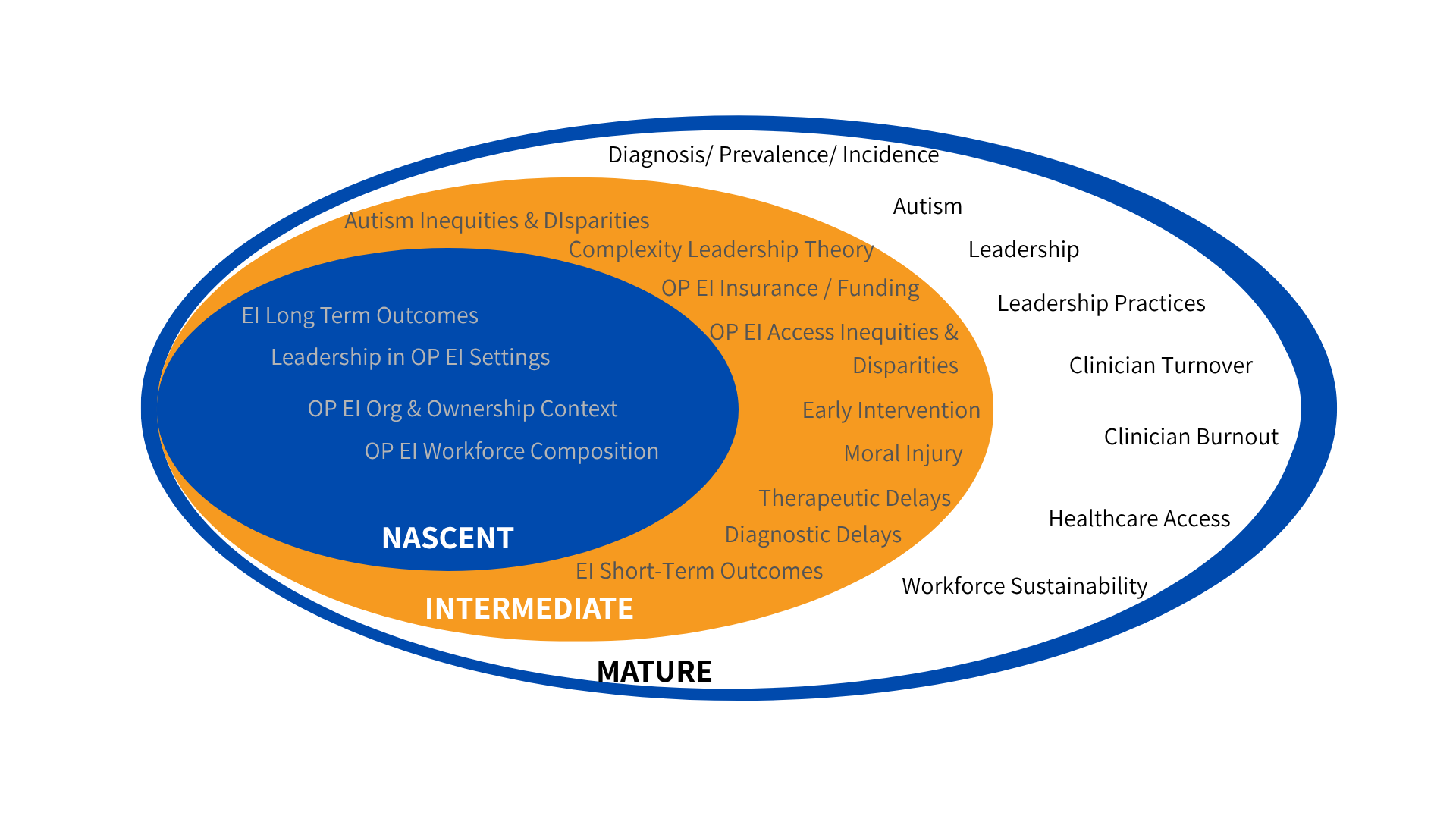
Mature fields, a nascent intersection.

Autism, leadership, workforce sustainability, and healthcare access are each mature bodies of literature on their own. Their intermediate overlaps early intervention, access disparities, clinician burnout, moral injury and are increasingly studied. But the nascent core: leadership practices in outpatient EI settings, organizational and ownership context, workforce composition, and long-term EI outcomes, is where this dissertation sits.

Nested ovals diagram showing mature, intermediate, and nascent areas of literature across autism, leadership, workforce sustainability, and healthcare access.
Figure 2 — Literature Maturity
Anticipated Contribution

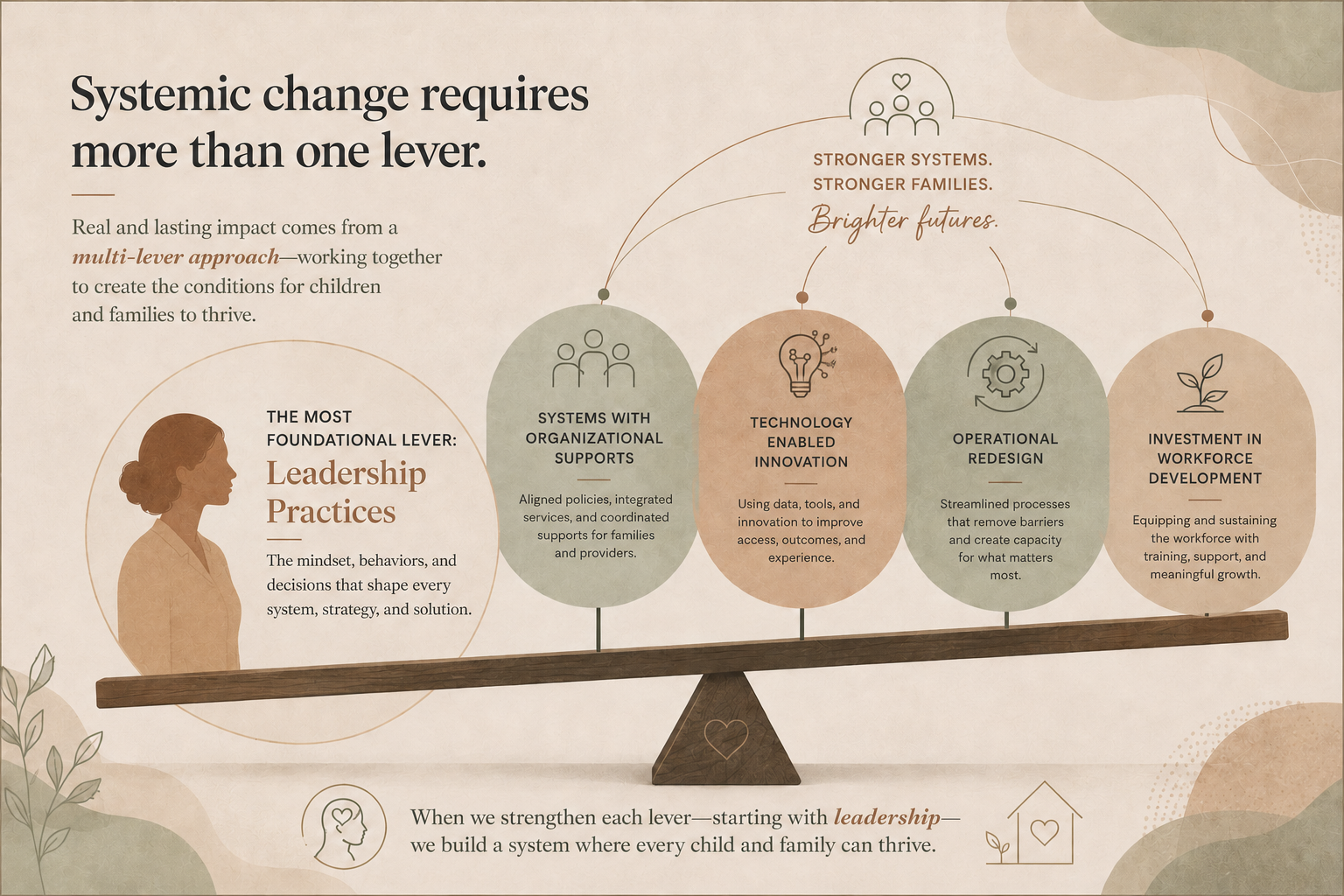
The Leadership for Access Equity Framework.

A high-level model for addressing systemic barriers in early intervention care, connecting what leaders do to what families can actually reach.

Research aim: to inform a leadership model that strengthens workforce sustainability and improves equitable access to care.

Toward a Leadership for Access Equity Framework — a research-informed model showing workforce sustainability, systems and organizational supports, operational redesign, and technology-enabled innovation connecting to access to care outcomes.