The Human Cost of
Leadership Gaps
in Outpatient Early Intervention Care.

Doctoral research on how leadership practices in outpatient behavioral health organizations shape workforce sustainability and access to timely autism diagnostic and therapeutic care for neurodivergent children in the early intervention window.
This research sits at the intersection of my professional leadership experience in healthcare operations and my personal experience navigating early intervention systems as a momma to two neurodivergent littles.
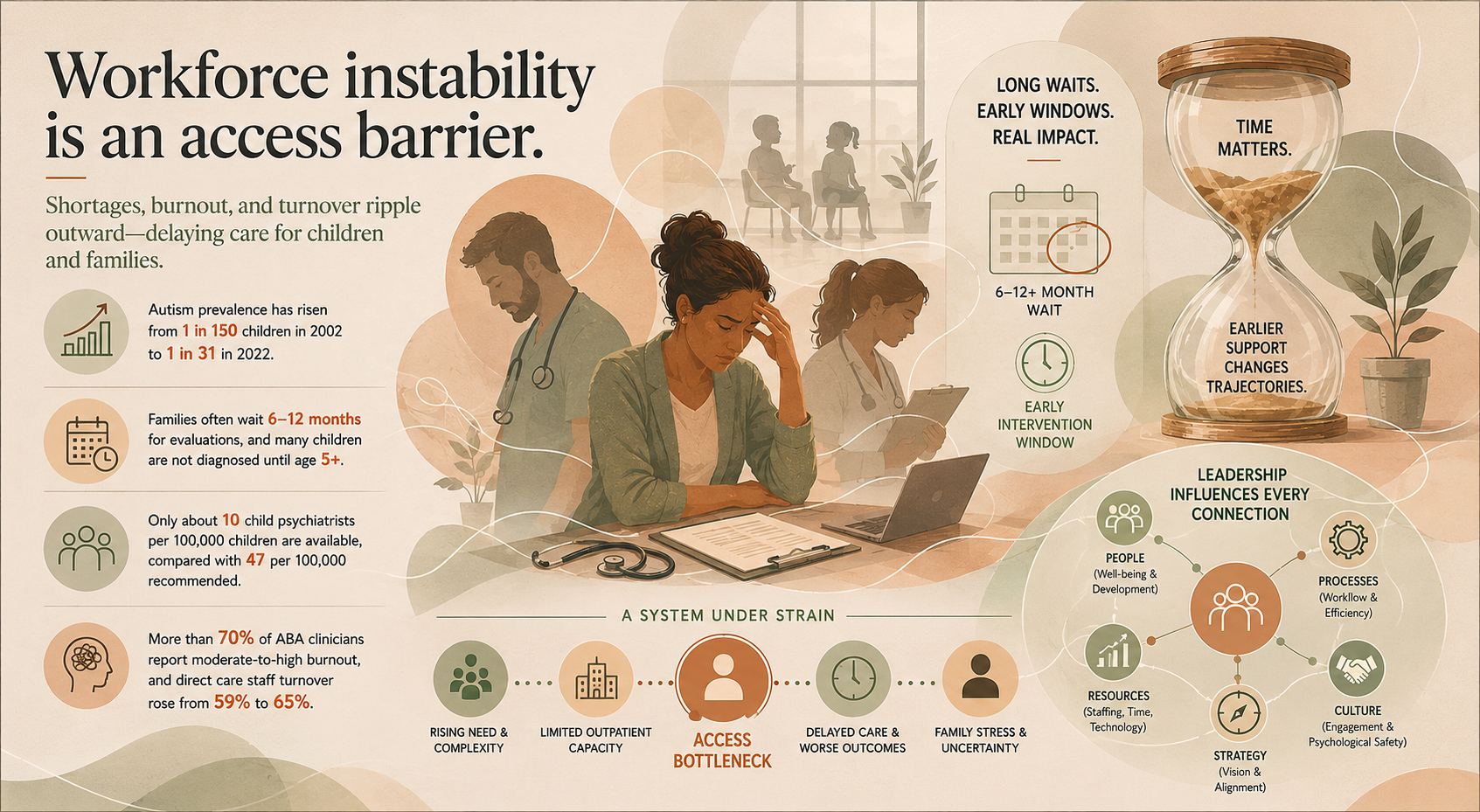
A widening gap between what is clinically possible and what families actually experience.
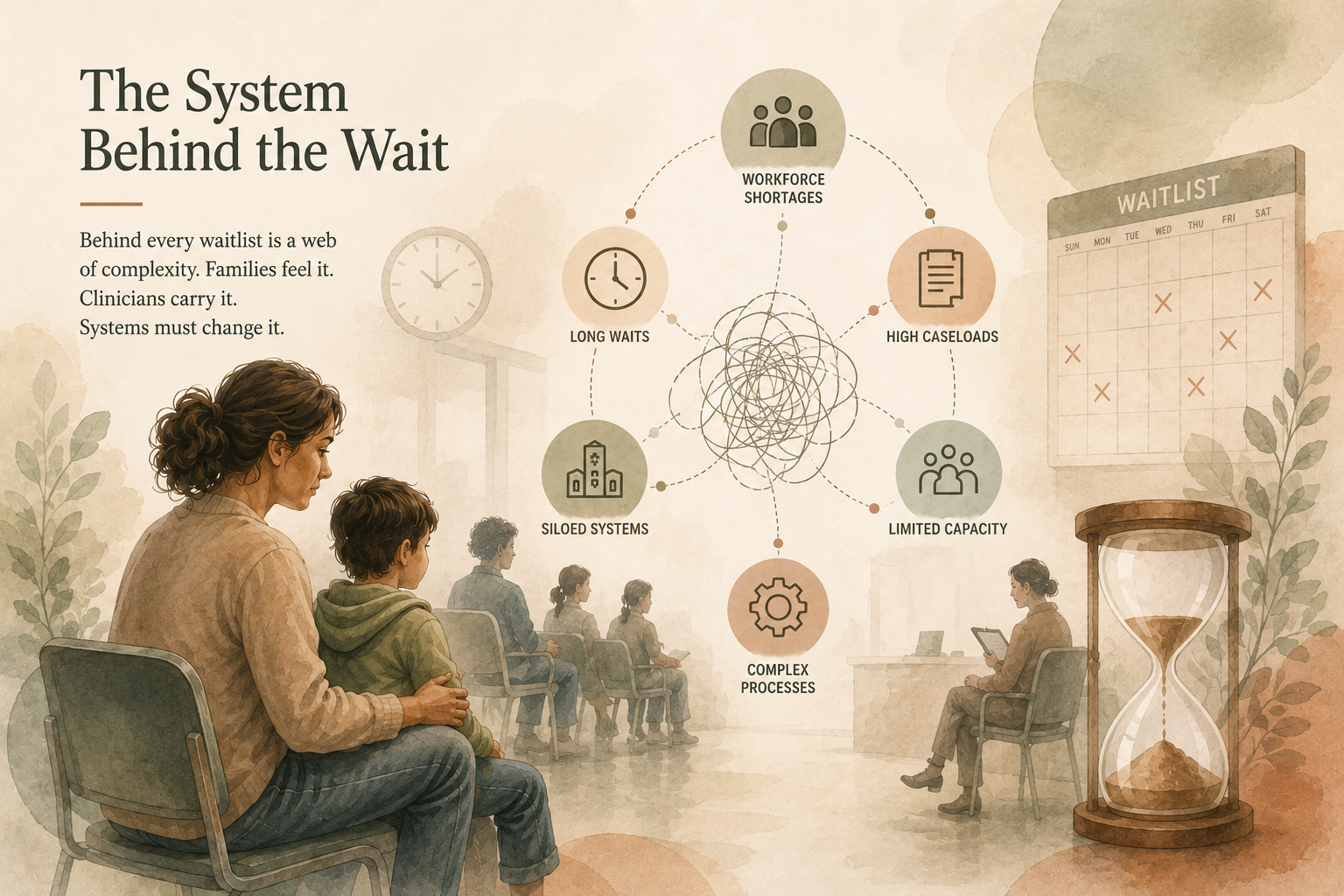
Families can wait months to years, for diagnosis and therapeutic care during the most critical developmental window of childhood. At the same time, the workforce providing that care is experiencing moral injury, burnout, turnover, and instability.
This research explores how leadership practices may shape the conditions that influence workforce sustainability, access to care, and long-term outcomes for children and families.
Autism can be diagnosed as early as 18 months, yet the average age of diagnosis in the U.S. remains five years old, with even greater delays for girls and for children from racially and ethnically marginalized communities.
Autism Speaks, 2025; Isaac et al., 2025
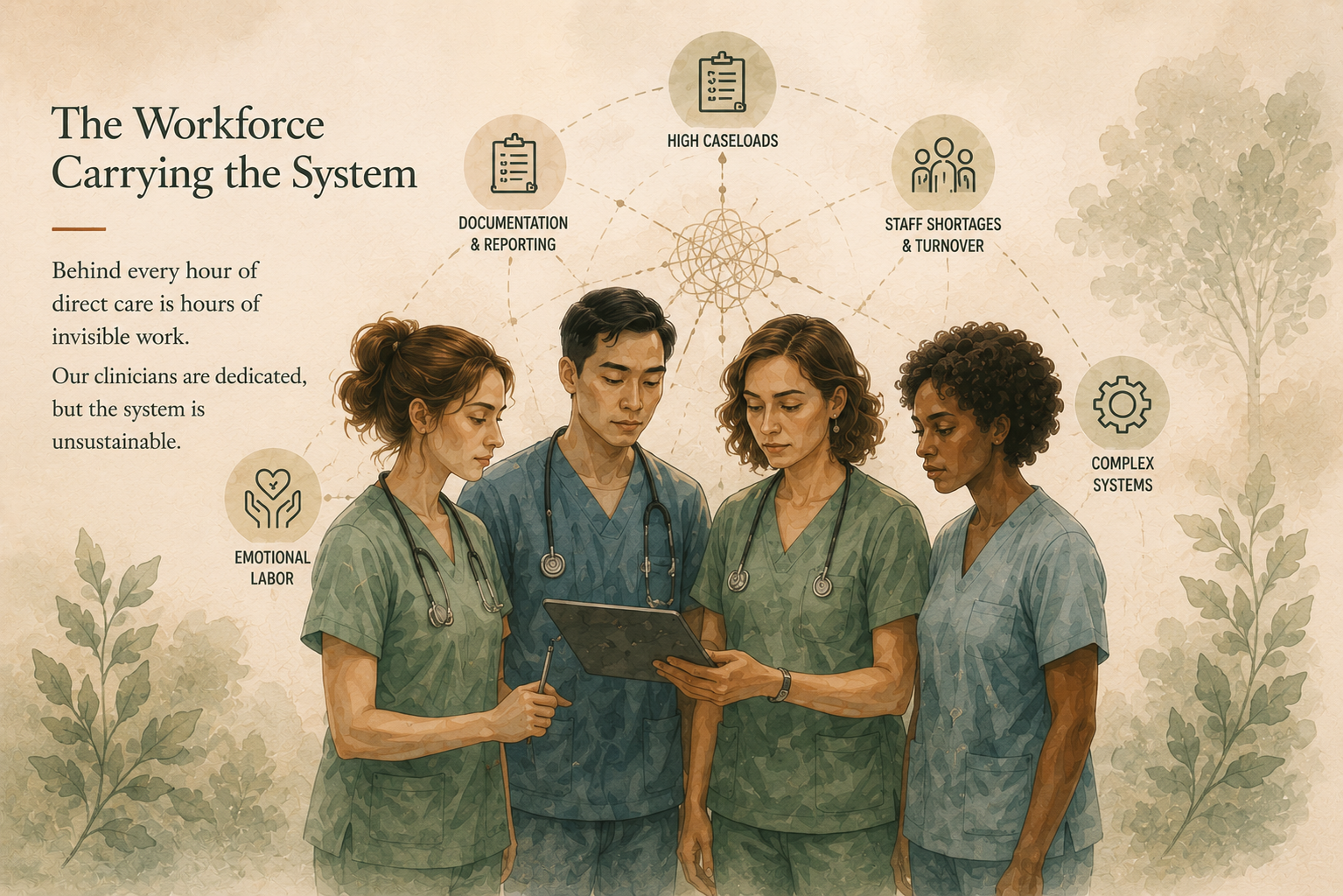
The clinicians carrying this work are purpose-driven and increasingly depleted.
Although moral injury remains largely underrecognized in this sector, clinician burnout is more visible and the high rates of burnout and turnover that characterize this area of healthcare make it impossible to ignore.
Many professionals in this sector are deeply purpose-driven and enter the field with a genuine commitment to serving children and families. Yet that same commitment can become part of what makes workforce sustainability so difficult when organizations lack adequate support structures.
Awareness is widespread. Meaningful organizational change is rare.
Across early intervention and outpatient behavioral health, workforce shortages, burnout, turnover, and delayed access are well recognized. Yet meaningful organizational interventions remain difficult to implement and sustain.
Many organizations in this space are small or mid-sized businesses with limited resources, infrastructure, and operational maturity. Many are clinician-founded, with deep care expertise but less support around business strategy, systems design, and execution. At the same time, private equity consolidation may add pressure through profit-driven models, high billable hour expectations, reduced clinical autonomy, and turnover.
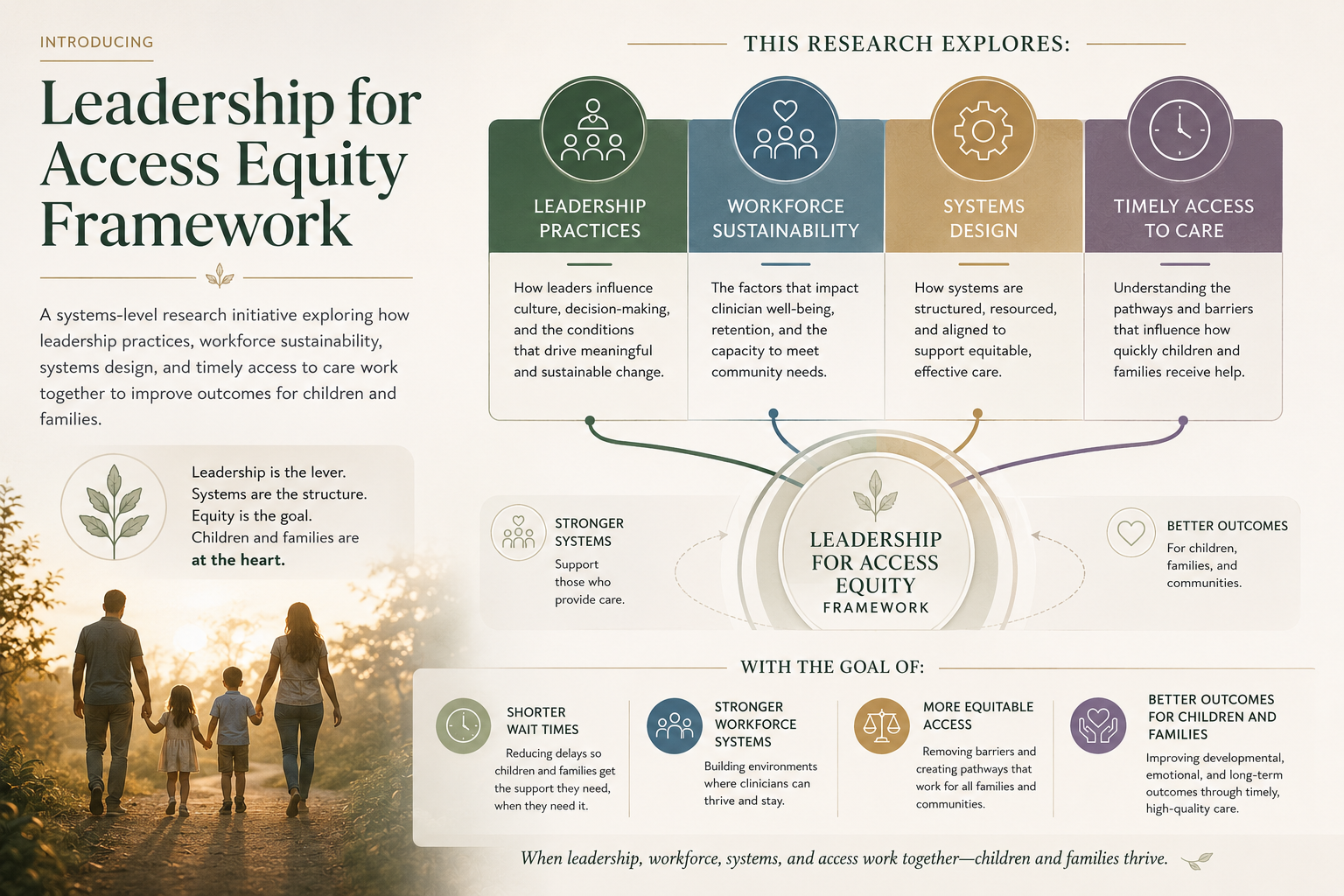
This research explores how leadership practices may serve as a foundational lever for strengthening workforce sustainability, improving organizational systems, and expanding timely access to care.
THE POTENTIAL SOLUTION
The study examines leadership across a range of outpatient early intervention settings, including:
- diagnostic and assessment organizations,
- ABA/ PT/ OT/ ST, and infant development programs,
- small clinician-founded practices,
- expanding multi-site outpatient organizations, and
- private equity-backed healthcare platforms.
Ownership and organizational context matter because they shape the operational realities in which leaders and clinicians function. Financial models, growth expectations, staffing structures, productivity pressures, and organizational priorities all influence what becomes possible or difficult to sustain within systems of care.
Rather than viewing access challenges solely as workforce shortages or operational inefficiencies, this research positions leadership as a foundational systems-level lever that shapes the conditions under which clinicians work, organizations function, and children and families experience care.
If this work touches yours,
let's talk.
I welcome engagement with researchers, physicians, clinicians, healthcare leaders, early intervention professionals, advocates, and organizations working to improve workforce sustainability and access to care.