Momma of Two Neurodivergent Littles
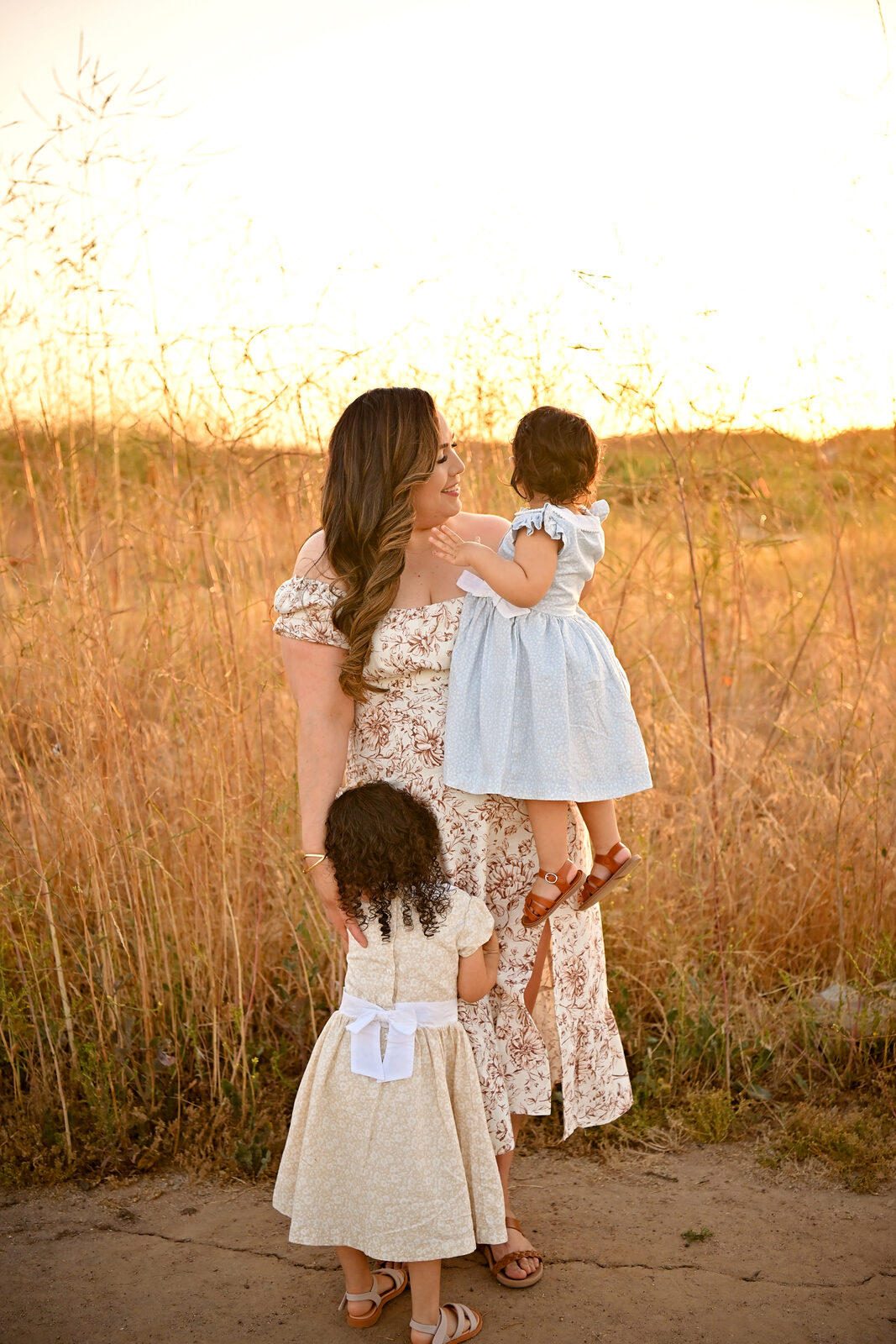
This research began in the most beautiful, sacred and painful place of my life: motherhood.
Lauren, our IVF rainbow baby, came into the world as an answer to so many years of prayer. Then at just five weeks old, we almost lost her to a rare and life-threatening case of infant botulism. She became completely paralyzed, spent a month in the NICU, and began fighting battles no baby should ever have to fight.
Since then, Lauren has continued to show us what resilience looks like. Now three, she has a medically complex history, global developmental delays, and is on the autism spectrum. Her days are filled with special education preschool, physical therapy, occupational therapy, speech therapy, and ABA.
Chloe, our youngest, is 21 months old and has also recently been diagnosed on the autism spectrum after experiencing global developmental delays. She is now beginning her own early intervention journey through occupational therapy, physical therapy, and infant stimulation services.
My girls have taught me that access is not abstract. It is the waiting, the advocating, the therapy schedules, the unanswered questions, the hope, the exhaustion, and the quiet prayers that your child will be seen, supported, and given every chance to thrive.
To the families walking a road like ours, this work is for you, too.
For the parents who knew something in their spirit before anyone else could name it. The ones who watched closely, searched, asked questions, and carried concerns that others may have minimized, dismissed, or told them to wait out. For the caregivers who have sat in waiting rooms with a folder full of paperwork, a phone full of portal messages, and a heart full of prayers whispered in between appointments. For the mothers and fathers waiting for evaluations, diagnoses, therapy openings, insurance approvals, regional center calls, school meetings, referrals, reports, and the next available appointment. For the ones learning acronyms they never expected to know, navigating systems they were never taught to navigate, and becoming case manager, advocate, researcher, scheduler, caregiver, and protector all at once.
For the parents who have cried in the car after holding it together in the exam room. For the ones who have smiled through exhaustion in therapy waiting rooms, filled out the same intake forms again and again, explained their child’s needs one more time, and gone home to keep practicing, keep documenting, keep calling, keep believing. For the families who live in the space between grief and gratitude. Who grieve the ease they imagined, while giving thanks for the child they adore. Who carry fear and faith in the same breath. Who wonder what the future will hold, while still showing up each day with a love that refuses to give up.
For the parents who celebrate milestones the world may not fully understand. The first word. The first step. The first bite of a new food. The first time their child points, waves, looks over, sleeps through the night, tolerates a sound, enters a classroom, asks for help, reaches for them, or finds a way to say, I love you. In families like ours, these moments are not small. They are sacred. They are fought for. They are prayed over. They are the kind of miracles that change the atmosphere in a home. And for the parents who have wondered in the quietest parts of the night whether they are doing enough, whether they missed something, whether they should have pushed harder, called sooner, known more, or found another door to open, I want you to hear this:
You are not failing your child. You are loving your child inside systems that too often make families carry what should have been shared. You are doing holy work in ordinary rooms, with tired eyes, full calendars, heavy hearts, and a love that keeps rising.
I see the tenderness and the fight. I see the exhaustion behind the advocacy. I see the ache behind the hope. I see the way you study your child, protect their dignity, learn their language, celebrate their becoming, and believe in who they are before the rest of the world fully understands them.
This research is about leadership, workforce sustainability, access, and systems change. But beneath all of that, it is about children waiting on the other side of those systems. It is about families holding everything together while they wait. It is about the parents trying to bridge every gap with love, persistence, and prayer. And it is about the belief that our children deserve more than delayed care, overwhelmed clinicians, fragmented systems, and exhausted families left to navigate it all alone.
This dissertation is dedicated to my girls, and to every family fighting for timely access, compassionate care, and a system that sees the fullness, beauty, dignity, and possibility within their child. You and your children are not invisible here. You are part of the heartbeat of this work.
A Letter to the Early Intervention Ecosystem
To the clinicians, physicians, therapists, evaluators, care coordinators, administrative teams, educators, and every person who helps families access early intervention care: Thank you.
Thank you for meeting families like mine in one of the most tender, uncertain, and deeply meaningful seasons of our lives. By the time we reach you, many of us have already spent countless nights worrying, searching for answers, filling out forms, making calls, waiting for appointments, and hoping someone will truly see our child. You meet us when our hearts are both fragile and fierce. You meet us in the middle of fear, confusion, exhaustion, and hope. And in those moments, the way you show up matters more than you may ever fully know.
You are dealers of hope.
Often, you are the first person who helps a parent feel less alone. The first person who helps a family move from fear to understanding, from waiting to action, from overwhelm to direction. You are often angels in the most ordinary rooms. You meet our children after reports, evaluations, scores, and developmental comparisons have already told us so much about what they cannot yet do. You meet us after we have read pages filled with delays, deficits, concerns, risks, and gaps. And then, with so much grace, you help us see our children again.
Not as a list of limitations. Not as a diagnosis. Not as data on a page. Not as everything they are not doing compared to other children their age. You help us see their beauty. You remind us of what they can do. You notice the effort behind the smallest movement, the courage behind the tiniest attempt, the communication inside a glance, the intelligence inside a different way of engaging with the world. You see their gifts.
You see their brilliance, their humor, their tenderness, their determination, their rhythm, their light.
And when parents are tired, scared, overwhelmed, or buried under so much that makes everything feel heavy, you hand our hope back to us. You remind us that our children are not behind in worth, beauty, dignity, or possibility. They are whole. They are becoming. They are wonderfully made. For that, I will never stop being grateful.
To the clinicians and therapists who get on the floor with our children, follow their lead, learn their language, honor their pace, and cheer for every tiny step forward: thank you.
To the physicians and evaluators who listen carefully, document thoughtfully, and help families access answers and care: thank you.
To the administrative staff, schedulers, coordinators, referral teams, front office teams, and every person behind the scenes who answers calls, manages waitlists, processes paperwork, explains next steps, and helps families find their way through complicated systems: thank you.
I see how deeply you care. I see the heart you bring. I see how you carry the weight of your calling while also carrying the day-to-day realities of full schedules, complex documentation, waitlists, productivity expectations, staffing shortages, family needs, system barriers, and emotional labor that often goes unseen. I see the tension of loving the work and being tired by the work. Of knowing this is what you were called to do, while also feeling the cost of doing it in systems that are stretched too thin. Thank you for not giving up on your calling. Thank you for continuing to meet children and families with care, even when you are carrying more than people may realize. Thank you for choosing presence in a field where burnout is real, compassion fatigue is real, and the daily demands can slowly wear down even the most passionate hearts.
And still, you show up.
You show up for our children. You show up for our families. You hold hope with us until we are strong enough to hold it again ourselves. This research is also for you.
It is for the clinicians, physicians, therapists, evaluators, administrative teams, care coordinators, educators, and early intervention professionals who deserve to be supported, protected, and sustained in the work they love. Because families cannot receive the care they need if the people providing that care are burning out, leaving, or being asked to keep pouring from places that have not been replenished. Access to care is not only about whether a service exists. It is also about whether the people delivering that care are supported, sustained, and able to remain in the work.
To every person serving children and families in the early intervention ecosystem: please know that your work matters. Your presence matters. Your compassion matters. The way you speak to us, the way you see our children, the way you help us take the next step, all of it matters. You are part of the hope families carry home.
And my hope is that this work helps move the field from awareness to action by advancing the leadership conditions, workforce supports, and systems-level changes needed so that you can continue doing this critical work without losing yourself in the process.
With profound gratitude to:
- Angelina Gonzalez Landero, M.S., CCC-SLP
- Everyone at ICEC
- Dr. Heidi Herrera
- Dr. Maya Vinod
- Madison Walker
You have each been a lifeline to our family in ways words can only begin to hold. Your love, care, wisdom, advocacy, and steady presence have helped carry us through some of the most tender parts of this journey.
You are woven into the heart of this work.